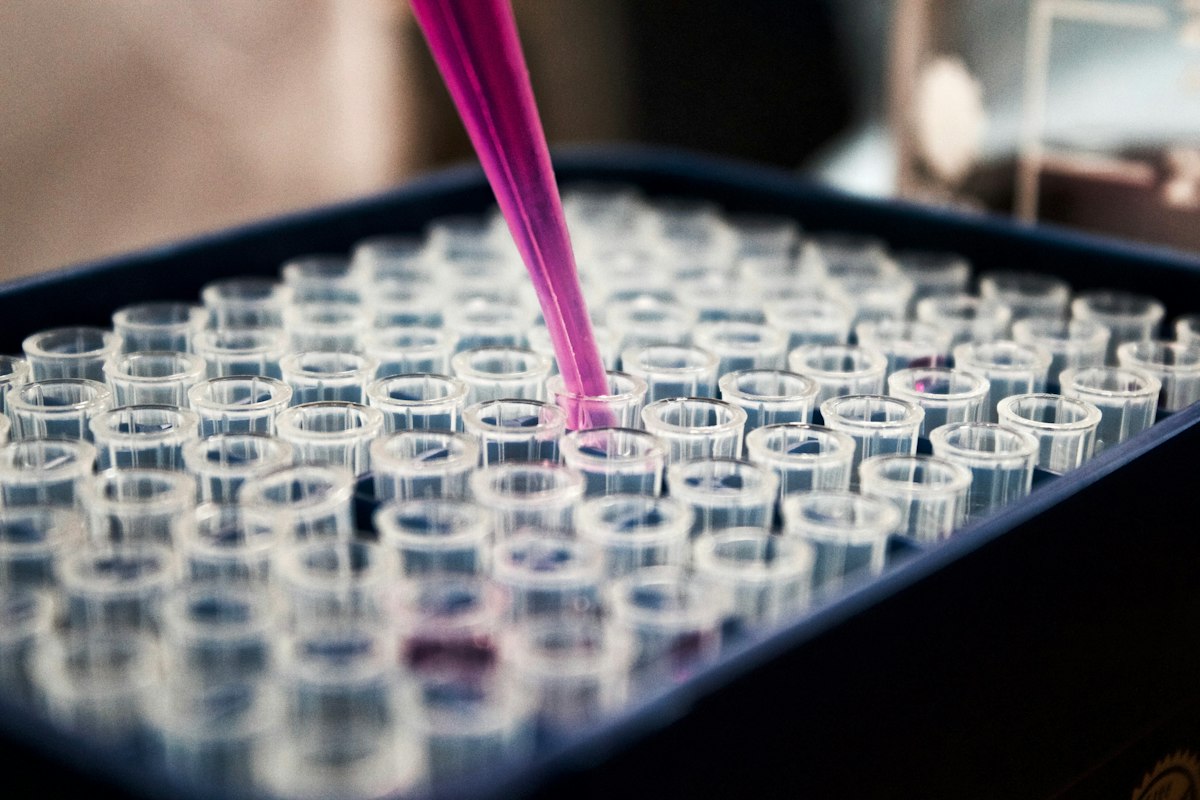
Epigenetic Reprogramming Without Cancer: Partial Yamanaka Factors Reach Safety Milestone
Cyclic expression of Oct4, Sox2, and Klf4 reverses epigenetic age without tumor formation — Altos Labs reports 18-month primate safety data showing controlled rejuvenation is within reach

Credit: Altos Labs / Science Photo Library
Abstract
In 2006, Shinya Yamanaka showed that four transcription factors could reprogram adult cells back to a pluripotent state. The problem: full reprogramming erases cell identity and produces teratomas. The breakthrough: partial, cyclic expression reverses epigenetic age while preserving cell identity. Altos Labs has now reported 18-month primate safety data showing no tumor formation with their protocol.
Yamanaka's 2006 discovery that Oct4, Sox2, Klf4, and c-Myc (OSKM) could reprogram differentiated cells into induced pluripotent stem cells earned the 2012 Nobel Prize. But the clinical problem was immediate: full reprogramming produces cells that form teratomas — tumors composed of disordered tissue from all three germ layers.
Ocampo et al. at the Salk Institute published the key experiment in Cell in 2016. Using a doxycycline-inducible OSKM system in progeroid mice, they applied cyclic expression: two days on, five days off, for several months. Treated mice showed reversal of epigenetic age marks and extended lifespan — without tumor formation. The brief pulse reversed epigenetic age but stopped short of erasing cell identity.
Sinclair's lab at Harvard advanced this further. Yang et al. in Cell (2023) demonstrated that epigenetic information loss is itself a driver of aging. They created mice with accelerated epigenetic noise (without DNA mutations) and showed this alone was sufficient to accelerate aging. Partial reprogramming with OSK (dropping oncogenic Myc) reversed the noise and restored youthful gene expression in retinal ganglion cells, kidney, and muscle.
The retinal work was particularly compelling: AAV-delivered OSK factors to aged mice with glaucoma-like damage reversed DNA methylation age, restored youthful gene expression, regenerated damaged axons, and recovered vision. This was reversal of established damage, not prevention.
Altos Labs, launched with $3 billion, assembled the world's leading reprogramming researchers: Izpisúa Belmonte, Horvath, Yamanaka (advisory), and Wolf Reik. Their 18-month primate safety data, presented at the Buck Institute Aging Symposium in late 2025, showed no teratoma formation, no abnormal proliferation, and no off-target reprogramming. Epigenetic clock analysis showed 3–5 year biological age reduction in treated tissues. Functional measures showed improved skeletal muscle fiber area and reduced fibrosis.
The safety challenges are real. c-Myc is an oncogene — most protocols now use OSK or further-reduced factor combinations. The window between therapeutic reprogramming and dangerous dedifferentiation is narrow. Factor combination, expression level, pulse duration, and cycle frequency are still being optimized.
Life Biosciences targets optic nerve regeneration using Sinclair's approach. Turn Biotechnologies uses mRNA-based delivery for transient expression without genomic integration. Retro Biosciences focuses on plasma-derived protein rejuvenation. The competition is intense, but the science is converging.
The implications are profound. If aging is driven by epigenetic information loss rather than irreversible DNA mutation, then aging is in principle reversible. The cell still has a backup copy of its youthful program; reprogramming factors help it find it. The question is no longer whether this works in principle — it is whether it can be delivered safely, affordably, and at scale to humans.
References
- 1.Takahashi, K. & Yamanaka, S. Induction of pluripotent stem cells from mouse embryonic and adult fibroblast cultures. Cell 126, 663–676 (2006).
- 2.Ocampo, A. et al. In vivo amelioration of age-associated hallmarks by partial reprogramming. Cell 167, 1719–1733.e12 (2016).
- 3.Yang, J.-H. et al. Loss of epigenetic information as a cause of mammalian aging. Cell 186, 305–326.e27 (2023).
- 4.Lu, Y. et al. Reprogramming to recover youthful epigenetic information and restore vision. Nature 588, 124–129 (2020).
- 5.Browder, K. C. et al. In vivo partial reprogramming alters age-associated molecular changes. Nat. Aging 2, 243–253 (2022).
Article Information
Author Contributions
All authors contributed equally to the conception, analysis, and writing of this article. Correspondence should be addressed to the first author.
Competing interests: The authors declare no competing interests.