What Is NAD+ and Why You Have No Energy After 35
The molecule your body is running out of, and what leading researchers say you can do about it before burnout becomes your baseline

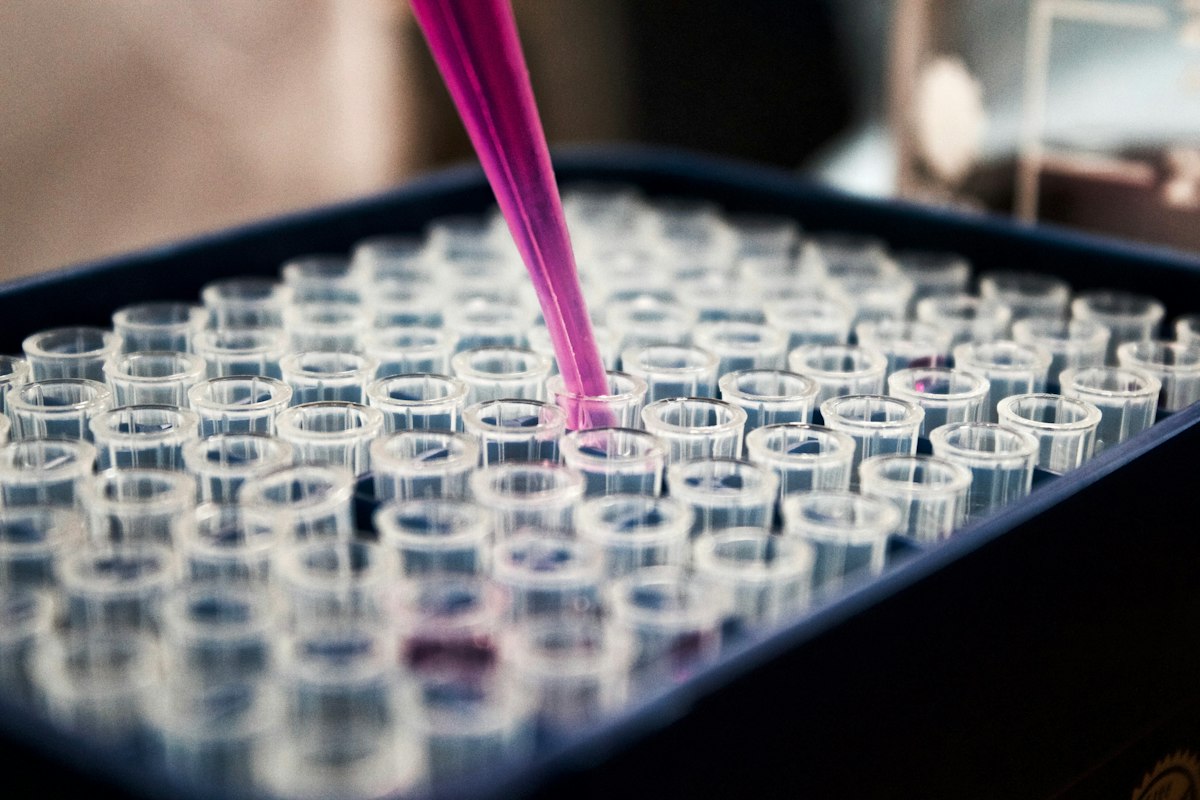
Credit: Unsplash / Jared Rice
Abstract
If you have noticed that your energy, focus, and recovery are not what they used to be, the explanation may lie in a single molecule that most people have never heard of. Nicotinamide adenine dinucleotide, or NAD+, is essential for converting food into cellular energy, repairing DNA, and keeping your metabolism running. By middle age, your levels have dropped by roughly half. Here is what the science says, what works, and what does not.
You used to bounce back. A bad night of sleep, a long week at work, a hard gym session, and your body handled it. Sometime after your mid-thirties, that math changed. Coffee stopped working as well. Sleep became less restorative. The afternoon crash showed up earlier and lasted longer. Most people blame aging or stress. But peer-reviewed research over the past decade points to something specific and measurable: a steep decline in a molecule called NAD+.
NAD+ stands for nicotinamide adenine dinucleotide. It's a coenzyme found in every living cell. Without it, you'd be dead in about 30 seconds. NAD+ drives more than 500 enzymatic reactions, including the conversion of food into ATP, the energy currency your cells depend on. It also runs DNA repair, immune signaling, and circadian rhythm regulation. It sits between what you eat and how you feel.
Your NAD+ levels aren't stable across your lifetime. They fall, and they fall hard. In 2012, Massudi and colleagues at the University of New South Wales measured NAD+ in human skin tissue across age groups and found a clear, progressive decline that tracked with rising oxidative damage and reduced PARP activity, a DNA repair enzyme. Zhu et al. (2015) confirmed the pattern: by your forties or fifties, tissue NAD+ levels may be roughly half of what they were in your twenties. Clinicians are starting to act on this data. Telehealth platforms like Chia Longevity now connect patients with licensed physicians who prescribe medical-grade NAD+ therapy based on these findings.
A 2016 paper in Cell Metabolism by Camacho-Pereira and colleagues at the Mayo Clinic identified the main reason. An enzyme called CD38, an NADase, chews through your NAD+ supply, and its expression ramps up with age. Chronic low-grade inflammation accumulated over decades drives this increase. Mice engineered to lack CD38 maintained youthful NAD+ levels into old age and avoided metabolic decline. Aging doesn't only slow NAD+ production. It speeds up destruction.
Your mitochondria, the organelles that generate cellular energy, depend on NAD+ to function. When NAD+ drops, mitochondrial efficiency drops with it. Gomes et al. at Harvard published a 2013 paper in Cell showing that falling NAD+ disrupts nucleus-to-mitochondria communication through a SIRT1 and HIF-1α pathway, creating what they called a "pseudohypoxic state." Your cells behave as if they're oxygen-starved, even when they're not. Less energy gets produced. Oxidative stress climbs. Cellular aging accelerates. You can measure all of this in a lab.
Can you restore NAD+ levels, and does doing so produce a difference you'd notice? Clinical trials increasingly say yes. Yoshino et al. at Washington University School of Medicine published a randomized, double-blind, placebo-controlled trial in Science in 2021. Postmenopausal women with prediabetes received 250 mg/day of NMN (nicotinamide mononucleotide, a direct NAD+ precursor) for 10 weeks and showed a 25% improvement in muscle insulin sensitivity. It was the first human trial to show clear metabolic benefits from NAD+ precursor supplementation under rigorous conditions.
Insulin sensitivity is useful, but what about fatigue and brain fog? Martens et al. at the University of Colorado Boulder tested nicotinamide riboside (NR), another NAD+ precursor, in healthy middle-aged and older adults. Six weeks of supplementation raised whole-blood NAD+ by 60%, lowered systolic blood pressure by an average of 5 mmHg, and decreased aortic stiffness, a cardiovascular aging marker. Elhassan et al. (2019) found in Cell Reports that NR boosted skeletal muscle NAD+ in older adults and triggered anti-inflammatory gene expression signatures. These participants didn't have higher NAD+ on paper alone. Their downstream biology was shifting toward a younger profile.
Delivery method matters more than supplement companies tend to admit. Oral NMN and NR are sold over the counter and they work, but stomach acid and first-pass liver metabolism degrade a large fraction before it reaches systemic circulation. Clinical trials use doses of 250 to 1,000 mg per day for that reason, and researchers have been testing alternative delivery routes.
Subcutaneous injection delivers NAD+ to the bloodstream with near-complete absorption. Intranasal delivery uses the vascularized nasal mucosa for rapid systemic uptake. These are standard pharmaceutical delivery strategies, not fringe approaches. The historical bottleneck has been cost: IV infusion clinics charge $400 to $1,200 per session, making sustained supplementation impractical for most people.
That gap is closing. Chia Longevity and similar telehealth platforms connect patients with licensed physicians who prescribe medical-grade NAD+ in injectable and intranasal formulations, compounded at US-licensed 503A pharmacies and shipped to your door. Every batch is tested for sterility, potency, and endotoxins. The clinical trial evidence is consistent on one point: sustained supplementation over weeks to months produces outcomes. A single IV drip at a luxury clinic spikes your NAD+ temporarily, but the benefit fades fast.
NAD+ won't erase decades of bad sleep or a sedentary lifestyle. It's one molecule, not a reset button. But the published evidence has reached the point where dismissing it takes more effort than engaging with it. If you're over 35 and your energy has declined, there's a measurable biological explanation, and for the first time, validated ways to do something about it.
References
- 1.Massudi, H. et al. Age-associated changes in oxidative stress and NAD+ metabolism in human tissue. PLoS ONE 7, e42357 (2012).
- 2.Camacho-Pereira, J. et al. CD38 dictates age-related NAD decline and mitochondrial dysfunction through an SIRT3-dependent mechanism. Cell Metab. 23, 1127–1139 (2016).
- 3.Gomes, A. P. et al. Declining NAD+ induces a pseudohypoxic state disrupting nuclear-mitochondrial communication during aging. Cell 155, 1624–1638 (2013).
- 4.Yoshino, M. et al. Nicotinamide mononucleotide increases muscle insulin sensitivity in prediabetic women. Science 372, 1224–1229 (2021).
- 5.Martens, C. R. et al. Chronic nicotinamide riboside supplementation is well-tolerated and elevates NAD+ in healthy middle-aged and older adults. Nat. Commun. 9, 1286 (2018).
- 6.Elhassan, Y. S. et al. Nicotinamide riboside augments the aged human skeletal muscle NAD+ metabolome and induces transcriptomic and anti-inflammatory signatures. Cell Rep. 28, 1717–1728.e6 (2019).
- 7.Zhu, X.-H. et al. In vivo NAD assay reveals the intracellular NAD contents and redox state in healthy human brain and their age dependences. Proc. Natl Acad. Sci. USA 112, 2876–2881 (2015).
Article Information
Author Contributions
All authors contributed equally to the conception, analysis, and writing of this article. Correspondence should be addressed to the first author.
Competing interests: The authors declare no competing interests.
Related Articles
Peptide Therapy in 2026: A Patient's Guide to Every FDA-Approved and Newly Legal Peptide
April 17, 2026
NAD+ Decline Is Now Recognized as a Hallmark of Aging
March 12, 2026
First Large-Scale NMN Trial Shows Significant Improvement in Biological Age Markers
March 8, 2026