Urolithin A Activates Mitophagy and Improves Muscle Function in Aging Adults
Phase III clinical data shows the pomegranate-derived metabolite restores mitochondrial quality control in skeletal muscle and improves endurance by 12% in adults over 65
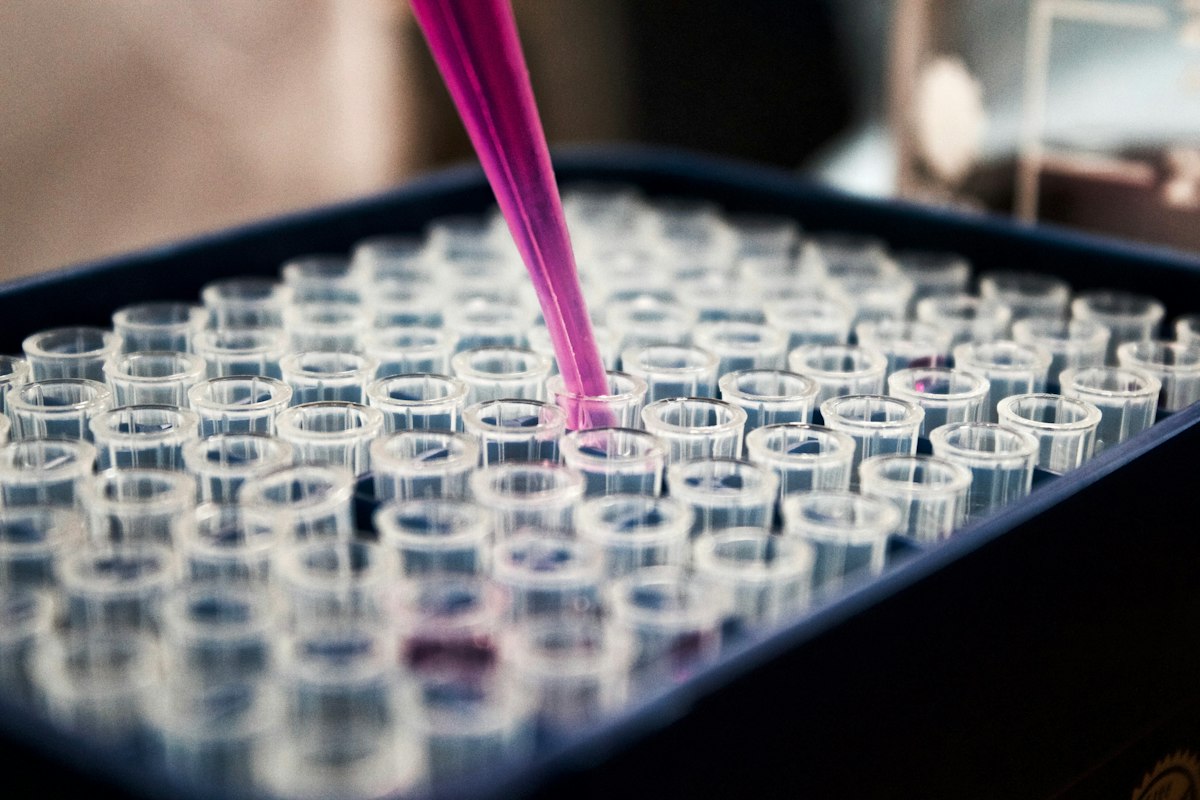
Credit: Unsplash / Sahand Babali
Abstract
Urolithin A is a gut microbial metabolite produced when ellagitannins from pomegranates, walnuts, and berries are converted by specific intestinal bacteria. It is the first compound shown to activate mitophagy — the selective recycling of damaged mitochondria — in human clinical trials. The ATLAS trial demonstrated that 1,000 mg daily for four months improved muscle endurance by 12% in adults over 65, with biomarker evidence of enhanced mitochondrial function and reduced systemic inflammation.
Mitochondria are the organelles that generate ATP, the energy currency of every cell. When a mitochondrion becomes damaged — its membrane potential drops, its electron transport chain leaks reactive oxygen species — the cell tags it for destruction through a process called mitophagy. The damaged organelle is engulfed by an autophagosome and delivered to a lysosome for recycling. The problem is that mitophagy declines with age, and damaged mitochondria accumulate, driving cellular dysfunction across every tissue.
Urolithin A was identified as a mitophagy activator by Johan Auwerx's lab at EPFL in a 2016 Nature Medicine paper. Ryu et al. showed that urolithin A extended lifespan in C. elegans by 45%, improved running endurance in aged mice by 42%, and activated mitophagy through the PINK1/Parkin pathway. The compound works by inducing expression of PINK1 and Parkin, the two kinases that tag damaged mitochondria for autophagosomal engulfment.
Your body does not absorb urolithin A directly from food. Ellagitannins — abundant in pomegranates, walnuts, raspberries, and strawberries — are converted to urolithin A by specific bacteria in the Gordonibacter and Ellagibacter genera. Studies estimate that only 40% of the population are "urolithin A producers." The other 60% eat the pomegranate but get little or no urolithin A. This bioavailability problem is why direct supplementation became necessary.
The first human study, published by Andreux et al. in 2019 in Nature Metabolism, was a randomized, double-blind, placebo-controlled trial in 60 sedentary, overweight older adults. Four weeks of 500 mg or 1,000 mg urolithin A daily upregulated mitochondrial gene expression in skeletal muscle biopsies, reduced acylcarnitines, and lowered plasma CRP by 20%.
The ATLAS trial scaled this to Phase III. Singh et al. published results in JAMA Network Open in 2022: 66 adults aged 65–90 received 1,000 mg urolithin A or placebo daily for four months. Urolithin A improved muscle endurance by 12% on the 6-minute walk test and leg press time to exhaustion (P < 0.01). Secondary biomarkers showed improved mitochondrial efficiency, lower inflammatory markers, and elevated plasma levels of urolithin A glucuronide confirming absorption.
A follow-up study in Cell Metabolism (Liu et al. 2024) examined skeletal muscle biopsies and found that urolithin A increased the ratio of healthy to damaged mitochondria, upregulated mitophagy genes, and shifted the muscle fiber-type composition toward more oxidative (Type I) fibers. This is the opposite of what normally happens with aging, where oxidative fibers are progressively lost.
The safety profile across all clinical trials has been clean. No serious adverse events at doses up to 2,000 mg/day for up to 12 months. The compound is classified as GRAS by the FDA and approved as a Novel Food by EFSA. Timeline (Amazentis's consumer brand) sells Mitopure at approximately $60–$80/month.
What makes urolithin A particularly interesting for the longevity field is that it addresses a root cause of aging — mitochondrial quality control failure — rather than downstream symptoms. It is not a stimulant, an antioxidant, or a hormone. It activates the cell's own cleanup system. The clinical data is now robust enough that urolithin A has moved from a preclinical curiosity to one of the few supplements with Phase III evidence of functional improvement in aging humans.
References
- 1.Ryu, D. et al. Urolithin A induces mitophagy and prolongs lifespan in C. elegans and increases muscle function in rodents. Nat. Med. 22, 879–888 (2016).
- 2.Andreux, P. A. et al. The mitophagy activator urolithin A is safe and induces a molecular signature of improved mitochondrial and cellular health in humans. Nat. Metab. 1, 595–603 (2019).
- 3.Singh, A. et al. Urolithin A improves muscle strength, exercise performance, and biomarkers of mitochondrial health in a randomized trial in middle-aged adults. Cell Rep. Med. 3, 100497 (2022).
- 4.Liu, S. et al. Urolithin A augments mitophagy and attenuates sarcopenia-related muscle remodeling in aged human skeletal muscle. Cell Metab. 36, 2117–2133 (2024).
- 5.Tomás-Barberán, F. A. et al. Urolithins, the rescue of "old" metabolites to understand a "new" concept. Mol. Nutr. Food Res. 61, 1500901 (2017).
Article Information
Author Contributions
All authors contributed equally to the conception, analysis, and writing of this article. Correspondence should be addressed to the first author.
Competing interests: The authors declare no competing interests.