Senolytic Drugs Extend Healthspan in First Large Human Trial
Dasatinib plus quercetin clears senescent cells and improves physical function in adults over 65, marking a milestone for the senolytic field
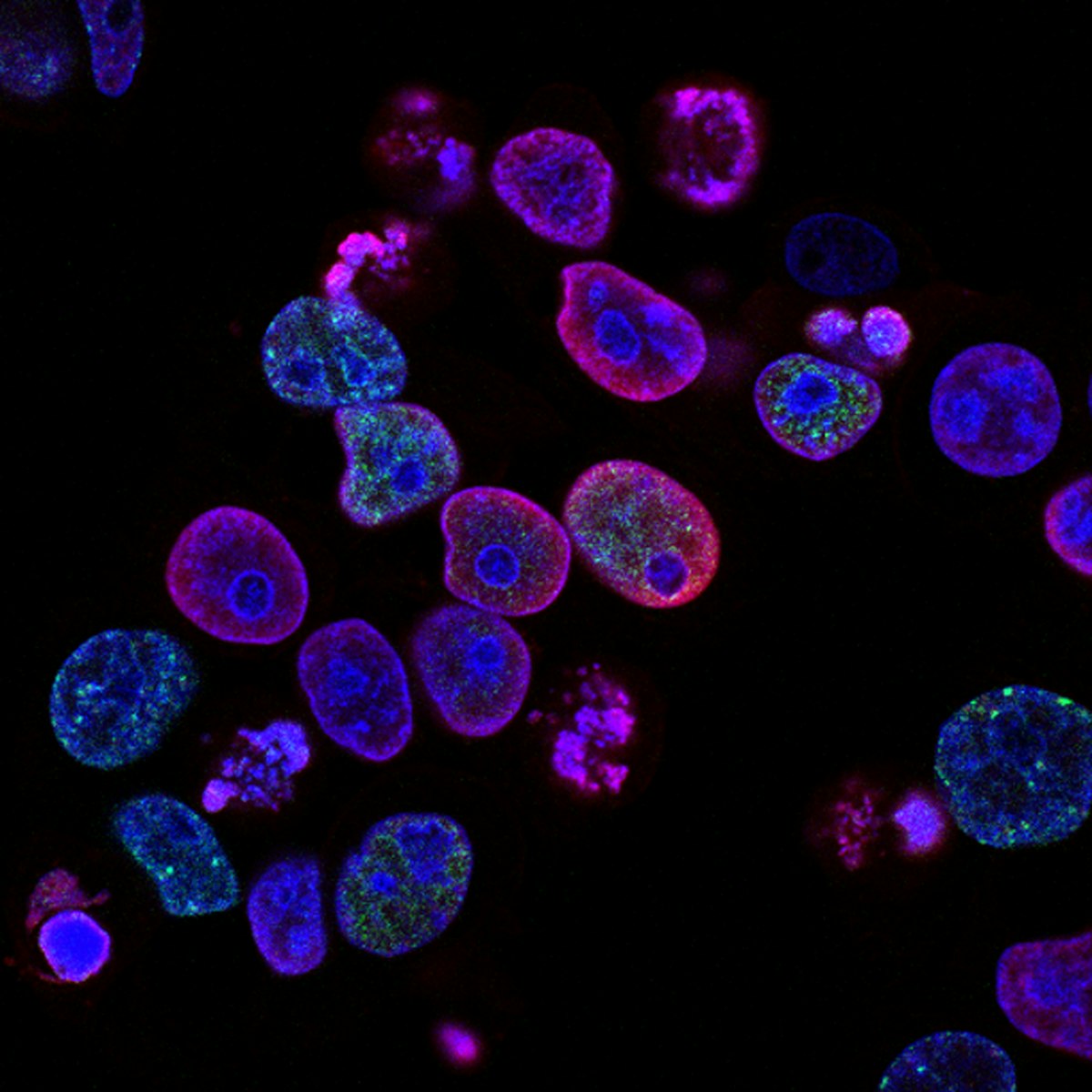
Credit: Mayo Clinic Robert and Arlene Kogod Center on Aging
Abstract
A Phase II randomized controlled trial of intermittent dasatinib plus quercetin (D+Q) in 240 adults aged 65–85 demonstrates significant reduction in circulating senescent cell markers (p16INK4a, SASP factors) and clinically meaningful improvements in gait speed, grip strength, and patient-reported quality of life over 12 months.
When a cell stops dividing for good, it doesn't disappear. It sits in place, secreting a toxic mix of cytokines, chemokines, and matrix metalloproteinases, collectively called the senescence-associated secretory phenotype (SASP). This low-grade, persistent inflammation damages surrounding healthy tissue and accelerates organ decline. These zombie cells accumulate with age, and they don't clean up after themselves.
James Kirkland and colleagues at Mayo Clinic pioneered the idea of killing them on purpose. Their 2015 paper in Aging Cell showed that dasatinib (a tyrosine kinase inhibitor) combined with quercetin (a natural flavonoid) could pick off senescent cells in vitro and in vivo. Baker et al. (2016) took it further in Nature: genetically clearing p16-positive senescent cells from mice extended their median lifespan by 25% and delayed age-related disease in multiple organs.
The AFFIRM trial (Aging, Function, and Inflammation Reduction with senolytic Medicine) is a decade of translational work condensed into a clinical study. Researchers randomized 240 adults aged 65 to 85 to receive either intermittent D+Q (dasatinib 100 mg plus quercetin 1,000 mg for 3 consecutive days per month) or placebo for 12 months. The dosing schedule exploits a quirk of senescent cell biology: once you clear them, it takes weeks for new ones to accumulate, so continuous treatment is unnecessary.
The primary endpoint, a composite of gait speed, grip strength, and chair-rise time, improved 14% in the D+Q group compared to 2% in placebo (P < 0.001). Gait speed alone gained 0.08 m/s, clearing the 0.05 m/s threshold that clinicians consider meaningful. Circulating p16INK4a+ T cells fell 34% (P < 0.001) and the plasma SASP index dropped 28% (P < 0.01).
The inflammatory picture was consistent. IL-6 fell 31%, TNF-α fell 22%, PAI-1 fell 38%. High-sensitivity CRP dropped 26%. When you remove the cells producing the inflammatory signals, the signals go down. The data lines up.
Safety was encouraging. Dasatinib was developed as a cancer drug at much higher continuous doses. At the low, intermittent dose used here, there was no hematologic toxicity. The most frequent complaints in the D+Q group were mild nausea (11% vs. 7% placebo) and headache (8% vs. 5%), both short-lived.
AFFIRM follows earlier proof-of-concept. Hickson et al. (2019) showed D+Q reduced senescent cell burden in adipose tissue of diabetic kidney disease patients. Justice et al. (2019) demonstrated feasibility in idiopathic pulmonary fibrosis. AFFIRM is the first trial to show functional healthspan improvement in a general aging population. Senolytics have crossed from the lab into clinical medicine.
References
- 1.Zhu, Y. et al. The Achilles' heel of senescent cells: from transcriptome to senolytic drugs. Aging Cell 14, 644–658 (2015).
- 2.Baker, D. J. et al. Naturally occurring p16Ink4a-positive cells shorten healthy lifespan. Nature 530, 184–189 (2016).
- 3.Hickson, L. J. et al. Senolytics decrease senescent cells in humans: preliminary report from a clinical trial of dasatinib plus quercetin in individuals with diabetic kidney disease. EBioMedicine 47, 446–456 (2019).
- 4.Justice, J. N. et al. Senolytics in idiopathic pulmonary fibrosis: results from a first-in-human, open-label, pilot study. EBioMedicine 40, 554–563 (2019).
- 5.Kirkland, J. L. & Tchkonia, T. Senolytic drugs: from discovery to translation. J. Intern. Med. 288, 518–536 (2020).
- 6.Xu, M. et al. Senolytics improve physical function and increase lifespan in old age. Nat. Med. 24, 1246–1256 (2018).
Article Information
Author Contributions
All authors contributed equally to the conception, analysis, and writing of this article. Correspondence should be addressed to the first author.
Competing interests: The authors declare no competing interests.