Fisetin: The Senolytic Flavonoid Moving Toward Phase II Trials
Preclinical data and Mayo Clinic Phase I results position the strawberry-derived compound as the most potent natural senolytic identified, with Phase II enrollment opening for age-related frailty

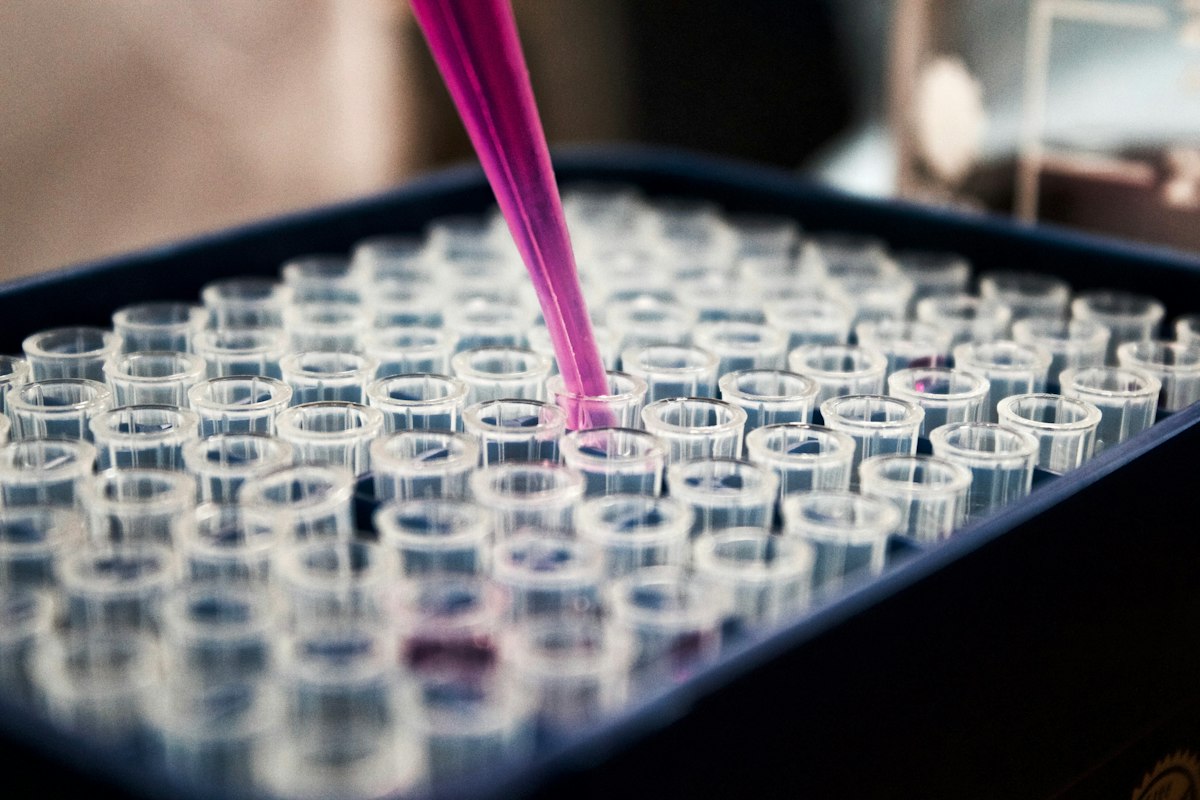
Credit: Unsplash / Jacek Dylag
Abstract
Senescent cells — "zombie cells" that stop dividing but refuse to die — accumulate with age and secrete inflammatory molecules called the SASP. Fisetin, a flavonoid found in strawberries and apples, was identified as the most potent senolytic in a screen of 10 flavonoids. Phase I results from the Mayo Clinic show it is safe at high oral doses, and Phase II trials for age-related frailty are now enrolling.
Cellular senescence was first described by Hayflick and Moorhead in 1961 as a permanent cell cycle arrest. That it could drive aging was demonstrated by van Deursen's lab at the Mayo Clinic in a 2011 Nature paper showing that selectively eliminating senescent cells in a progeroid mouse model delayed age-related pathologies across multiple organ systems. The mice lived longer, developed fewer cataracts, maintained more muscle mass, and showed less inflammation.
Senescent cells cause damage through the senescence-associated secretory phenotype (SASP) — a cocktail of inflammatory cytokines (IL-1α, IL-6, IL-8), matrix metalloproteinases, and growth factors. The SASP promotes chronic inflammation, disrupts tissue architecture, and can induce senescence in neighboring healthy cells. A small population of senescent cells — typically 1–15% of total cells in aged tissues — can drive outsized dysfunction.
The search for selective senolytic drugs produced the first hit in 2015 when Zhu et al. identified dasatinib plus quercetin. But dasatinib is a leukemia drug with side effects. Yousefzadeh et al. published the breakthrough in EBioMedicine in 2018: a screen of 10 flavonoids found fisetin reduced senescent cell viability by 70% at concentrations that left non-senescent cells largely unaffected. In aged mice, intermittent fisetin treatment reduced senescence markers in multiple tissues and extended median lifespan by approximately 10%.
The mechanism involves simultaneous inhibition of multiple pro-survival pathways that senescent cells depend on — BCL-2 family anti-apoptotic proteins, PI3K/AKT signaling, and p21-mediated survival. Normal cells, which do not depend on these pathways to the same degree, are spared.
The Mayo Clinic's Phase I AFFIRM trial tested oral fisetin at 20 mg/kg/day for two consecutive days (the "hit-and-run" senolytic protocol) in adults with age-related frailty. Preliminary results showed it was well-tolerated with no dose-limiting toxicities. Biomarker analysis showed reductions in circulating p16INK4a-expressing T cells and decreases in SASP factors including MMP-3 and PAI-1.
Phase II trials are now enrolling at Mayo Clinic, testing whether the two-day fisetin protocol, repeated monthly for six months, improves gait speed, grip strength, and the Short Physical Performance Battery. Results are expected in late 2027.
Fisetin is available over-the-counter at $20–$40/month. The typical self-administered protocol mimics the clinical trial: 20 mg/kg on two consecutive days per month. However, supplement-grade fisetin has variable bioavailability, and no OTC formulation has been validated against the pharmaceutical-grade material used in the Mayo trials.
The senolytic field is expanding. Dasatinib plus quercetin remains the most studied combination. Unity Biotechnology's UBX1325 showed positive Phase II results for diabetic macular edema. But fisetin occupies a unique position: natural compound, clean safety profile, oral administration, and strong preclinical data for whole-body senolytic effects.
References
- 1.Yousefzadeh, M. J. et al. Fisetin is a senotherapeutic that extends health and lifespan. EBioMedicine 36, 18–28 (2018).
- 2.Baker, D. J. et al. Clearance of p16Ink4a-positive senescent cells delays ageing-associated disorders. Nature 479, 232–236 (2011).
- 3.Zhu, Y. et al. The Achilles' heel of senescent cells: from transcriptome to senolytic drugs. Aging Cell 14, 644–658 (2015).
- 4.Kirkland, J. L. & Tchkonia, T. Senolytic drugs: from discovery to translation. J. Intern. Med. 288, 518–536 (2020).
- 5.Hickson, L. J. et al. Senolytics decrease senescent cells in humans: preliminary report. EBioMedicine 47, 446–456 (2019).
Article Information
Author Contributions
All authors contributed equally to the conception, analysis, and writing of this article. Correspondence should be addressed to the first author.
Competing interests: The authors declare no competing interests.